
Boston Property Records
Boston property records are held at the Suffolk County Registry of Deeds and the city's Assessing Department. As the state capital and largest city in Massachusetts, Boston has more than 673,000 residents and tens of thousands of recorded land documents. You can search Boston property records online through the city's property lookup tool or through MassLandRecords.com for deeds and mortgages. The Assessing Department keeps track of all assessed values, tax rates, and exemptions. Whether you need a deed, want to check a tax bill, or plan to look up who owns a parcel, the tools are free and open to the public.
Boston Overview
Suffolk County Registry of Deeds
All Boston property records for deeds, mortgages, and liens are filed at the Suffolk County Registry of Deeds. The registry is at 24 New Chardon Street in downtown Boston. It is part of the Massachusetts Secretary of State's office and serves Boston, Chelsea, Revere, and Winthrop. When you buy a home in Boston, the deed gets recorded here. The same goes for mortgages, lien releases, and homestead declarations. These records are the legal proof of who owns what in the city.
You can reach the Suffolk Registry by phone or visit in person. Hours run Monday through Friday. The registry also handles e-recording for attorneys and title companies who need to file documents without a trip to the office. Under M.G.L. Chapter 183, all deeds must be recorded at the registry to protect your ownership against third-party claims.
| Registry | Suffolk County Registry of Deeds |
|---|---|
| Address | 24 New Chardon Street, Boston, MA 02114 |
| Hours | Monday through Friday, 8:00 AM to 4:00 PM |
For more on how the Suffolk County system works and what documents you can find there, see the full Suffolk County property records page.
Boston Assessor's Office
The Boston Assessing Department sets the assessed value on every property in the city. The office is at 1 City Hall Square, Room 301 in Boston City Hall. Staff there handle assessment questions, exemption applications, and property data requests. You can call 617-635-4287 or email TRACFAXSG@boston.gov with questions. The Taxpayer Referral and Assistance Center, known as TRAC, is the main point of contact for most property tax questions in Boston.
Every year the city sets new tax rates based on total assessed values and the city budget. For FY 2026, the residential tax rate in Boston is $12.40 per $1,000 of assessed value. The commercial, industrial, and personal property rate is $26.96 per $1,000. That split matters for property owners because Boston uses a classification system that shifts more of the tax burden to commercial properties. A home assessed at $600,000 would owe about $7,440 in real estate taxes before any exemptions apply.
Boston offers a residential exemption worth 35% of the average assessed value of all Class One residential properties. For FY 2026, that saves up to $4,353.74 on your tax bill. You must own the property and live in it as your primary home to qualify. The city also has exemptions for blind persons, disabled veterans, and seniors who meet income and asset limits.
Boston Property Lookup Tools
The city runs an online property lookup tool at properties.boston.gov. This site is still in beta but works well for basic searches. You can look up any parcel by street address or parcel ID. The system pulls up assessed values, ownership info, tax data, and FY 2026 assessments. One thing to note: you cannot search by owner name on this tool. If you need to find all properties under one name, you will have to use the registry search instead.
The Boston property lookup portal shows current assessed values and property details for parcels across the city.
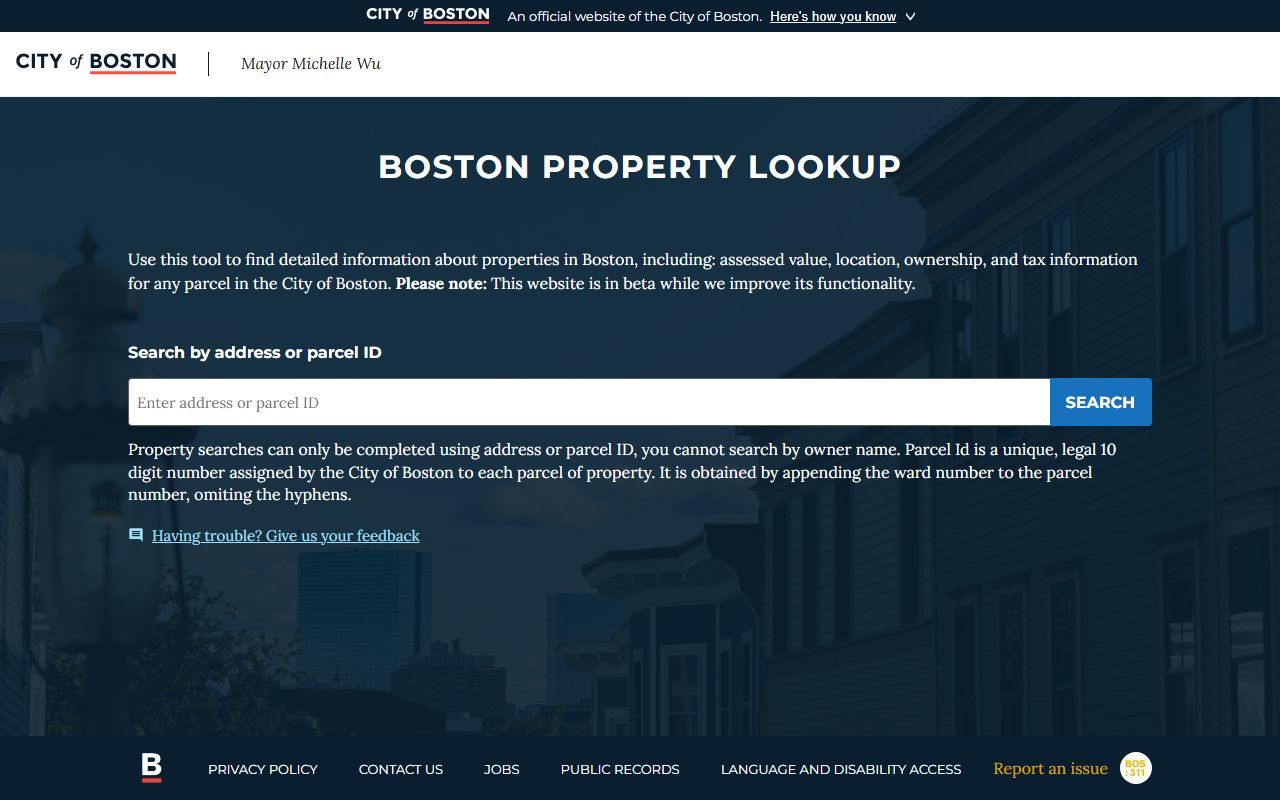
The beta site is still being improved, but it already covers all residential and commercial parcels in Boston.
For deeds and mortgages, use MassLandRecords.com and pick Suffolk County. The search is free. You can look up documents by name, book and page, or recorded date. The system goes back decades and includes scanned copies of most recorded documents. This is the same database used by title companies and real estate attorneys across the state.
The Boston Assessing Department website provides details on tax rates, exemptions, and assessment data for all city properties.
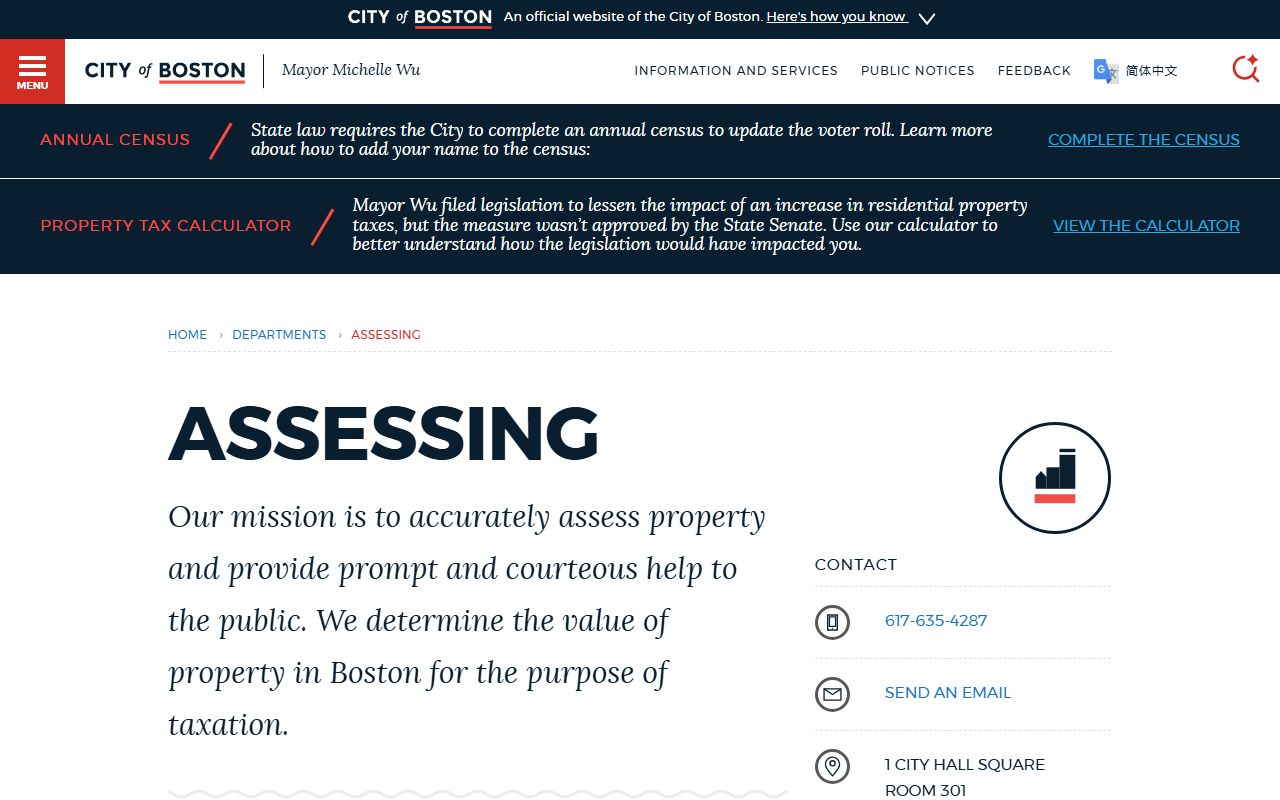
From this page you can access exemption forms, abatement applications, and contact information for the TRAC office.
Boston Property Recording Fees
Recording fees for Boston property documents are set by the state and apply at every Massachusetts registry. A deed costs $155 to record. A mortgage is $205. Mortgage discharges run $105. A Declaration of Homestead, which protects your home from most creditors under M.G.L. Chapter 188, costs just $35 to file. Most other documents are $105 each.
The deed excise tax in Boston is $4.56 per $1,000 of the sale price. On a $700,000 home sale, the excise comes to $3,192. This tax is paid at the time of recording and is separate from the recording fee. Certified copies from the registry cost $1.00 per page. Do not pay private companies that charge $100 or more for copies you can get yourself for a few dollars.
Note: All registry recording fees are the same statewide, so these costs apply whether you record in Suffolk, Middlesex, or any other county.
Property Records Laws in Boston
Boston property records fall under state law. The main statute is M.G.L. Chapter 183, which covers how deeds and other conveyances must be written and recorded. If a deed is not recorded, it may not protect you against someone else who later files a claim on the same property. Recording is how you put the world on notice that you own the land.
Some Boston properties are on the Registered Land system under M.G.L. Chapter 185. Registered Land works through the Land Court, and ownership transfers happen through certificates of title rather than standard deeds. About 20% of Massachusetts properties use this system. If your Boston property is registered, you will need Land Court approval before certain documents can be recorded.
Public access to all recorded land documents is protected under M.G.L. Chapter 66. Anyone can view deeds, mortgages, and liens at the Suffolk County Registry. You do not need to own the property or have any legal interest in it. The records are public and free to search online.
Nearby Cities
Several cities near Boston also have their own property records pages. Many of them file at different registries depending on which county they fall in.